
What is Surgical Menopause?
Feel like you need a PhD to get your head around it all?
Here’s everything you need to know about surgical menopause to help you navigate every stage.
Understanding the biology behind it
Surgical menopause happens when both ovaries are removed – usually during a procedure called a bilateral salpingo-oophorectomy (BSO) or when their blood supply is interrupted during pelvic surgery. You might also have a ‘TAH BSO’, which stands for Total Abdominal Hysterectomy with Bilaterol Salpingo-Oopherectomy, or ‘radical hysterectomy’. The ovaries are your body’s main producers of oestrogen, progesterone, and testosterone, and these hormones influence almost every system: your bones, heart, brain, skin, joints, mood, and metabolism.
When your ovaries are taken out, your hormone levels don’t fall gradually as they do in natural menopause; they drop immediately within the hours and days following your surgery. This is what makes surgical menopause so different – and intense. Your body, and particularly your brain, are suddenly deprived of hormones they rely on to function smoothly.
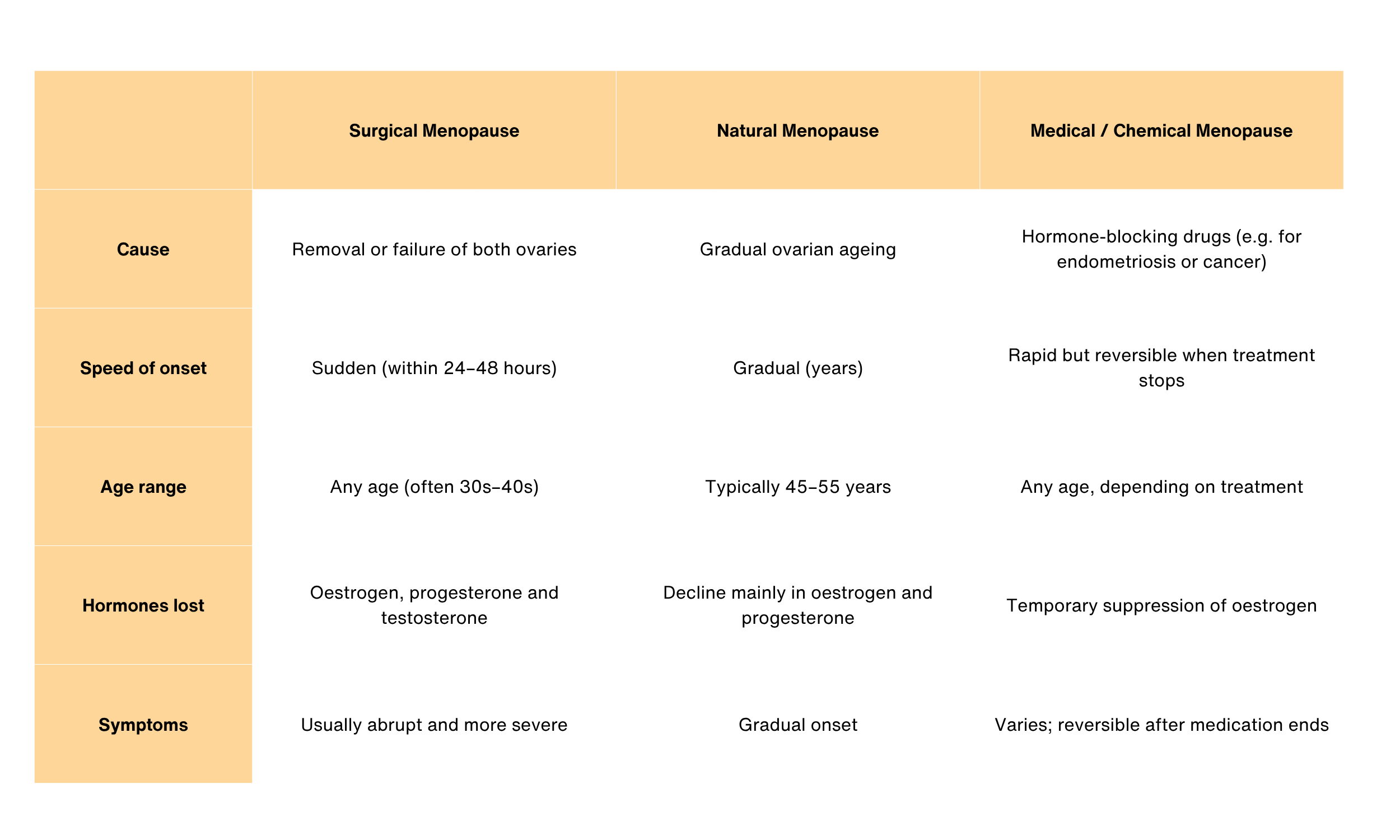
Because the change is instant, symptoms such as hot flushes, anxiety, joint pain and insomnia can appear within days. Emotional and cognitive symptoms can be just as strong — many women describe feeling “wired”, tearful or detached from themselves.
What happens in the body afterwards
Once the ovaries are removed:
Oestrogen drops almost immediately, affecting temperature control, brain chemistry, bone turnover, and cardiovascular health.
Progesterone disappears completely, which can affect sleep and mood regulation.
Testosterone halves, reducing energy, libido, and cognitive sharpness.
This hormonal vacuum disrupts neurotransmitters like serotonin and dopamine, which explains the sudden mood shifts, anxiety, or brain fog that many women experience.
Without oestrogen, collagen production also slows, affecting joints, skin elasticity and bladder tissue.
Health implications
Untreated surgical menopause before the age of 45 is linked to:
Higher risk of cardiovascular disease
Accelerated bone loss and osteoporosis
Increased incidence of depression and anxiety
Earlier cognitive decline and dementia risk
Reduced sexual function and vaginal atrophy
However, these risks are largely preventable with timely, adequate hormone replacement therapy (HRT) and ongoing lifestyle care. Studies from Mayo Clinic, BMJ, and the Royal College of Obstetricians and Gynaecologists consistently show that restoring hormones to natural levels until at least age 51 reduces the risk of long-term health outcomes.
Why individualised care matters
There is no single “right” surgical menopause experience. The impact depends on your age, health, genetics, and access to post-operative care. Some women adjust quickly; others need time and ongoing hormone adjustment. The most important step is individualised treatment — replacing hormones thoughtfully, monitoring response, and supporting every aspect of recovery, from pelvic health to emotional wellbeing.